
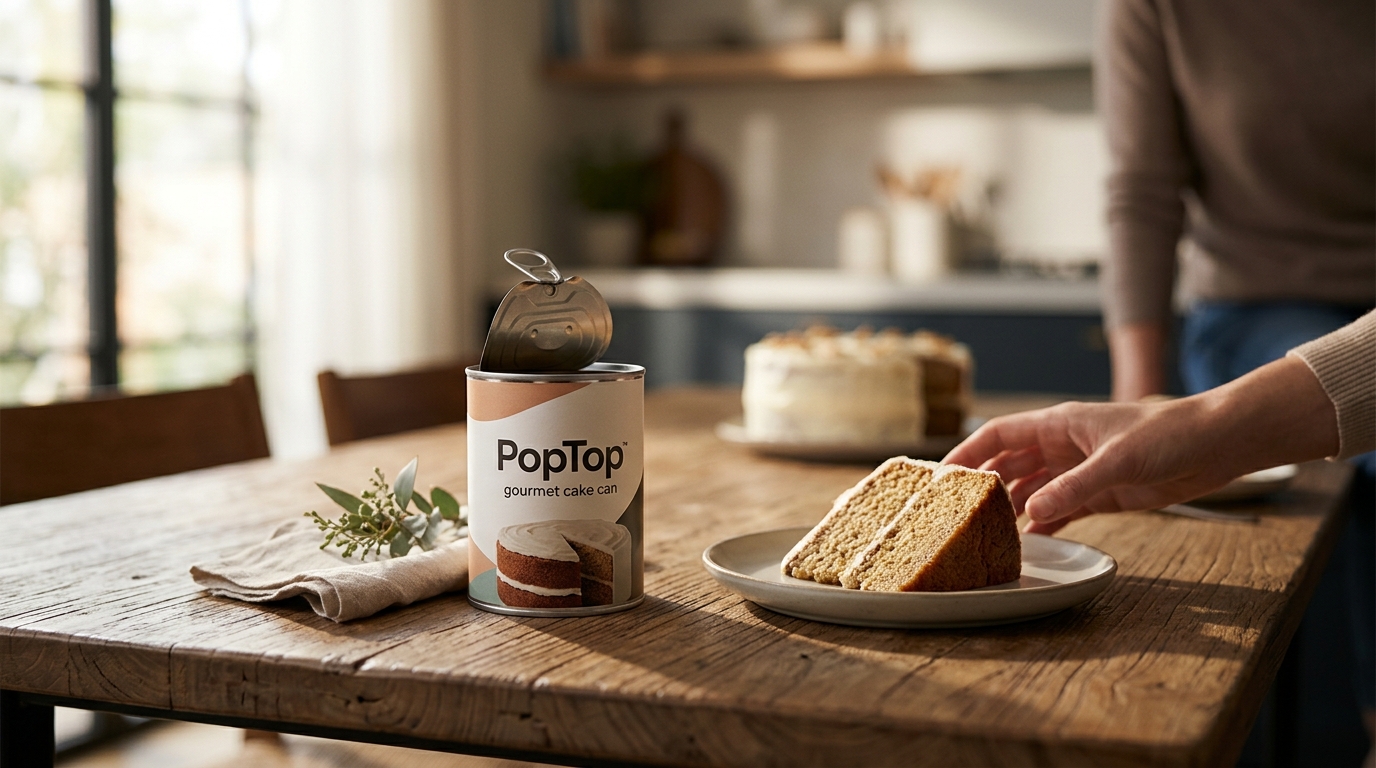
The global bakery industry is a massive economic engine, with the U.S. bread market generating 25.93 billion U.S. dollars in revenues and preserved pastry goods adding another 27.29 billion dollars to the total. According to Statista, this combined market approaches 53.22 billion U.S. dollars, highlighting the immense scale of baked goods consumption. Within this landscape, the emergence of cake in a can represents a significant shift in how consumers perceive freshness and convenience. Traditional cakes, which dominate the unpackaged category with approximately 4 billion U.S. dollars in retail sales, face stiff competition from sealed, portable alternatives. Data shows that while unpackaged cakes hold a massive share, the demand for preserved and portable pastry goods is growing rapidly. Understanding the shelf life differences between these two formats is critical for consumers who value both quality and longevity.
The Science of Sealed Freshness
Cake in a can is defined as a single-serving dessert where layers of cake, frosting, and toppings are sealed within a cylindrical container. This packaging method is not merely aesthetic; it is a functional preservation tool. The sealed environment creates a microclimate that slows down the oxidation process, which is the primary cause of staleness in baked goods. When a cake is exposed to air, the moisture within the crumb structure evaporates, leading to a dry, tough texture. By contrast, the pop-top can retains humidity effectively, keeping the cake moist for significantly longer periods than an open or loosely wrapped traditional cake.
The freshness guarantee offered by brands like Poptop underscores the confidence in this preservation model. Because the product is sealed until the moment of consumption, the risk of spoilage is drastically reduced. This is particularly important for perishable items. If an order arrives damaged or warm, the company stands behind it with a Freshness Guarantee that ensures the customer receives a product in optimal condition. This level of quality control is difficult to achieve with traditional cakes that are transported in open boxes or loosely wrapped containers.
Traditional Cake Degradation
Traditional cakes, whether bought from a local bakery or a supermarket, have a much shorter window of peak freshness. Once cut, a traditional cake begins to dry out almost immediately. The exposed surface area allows moisture to escape rapidly, and the crumb structure loses its elasticity. According to industry data, 137.7 million Americans consumed snack cakes in 2020, indicating a strong preference for shelf-stable or long-lasting sweet treats. This statistic highlights the consumer desire for convenience and longevity, which traditional cakes often fail to provide without refrigeration and careful wrapping.
Furthermore, traditional cakes are highly susceptible to environmental factors. Heat, humidity, and light can accelerate the degradation of frosting and cake layers. For example, buttercream frosting can melt or become greasy in warm temperatures, while whipped cream frosting can collapse. In contrast, the sealed can protects the dessert from these external elements. This makes cake in a can a superior option for events, travel, or office settings where refrigeration is not available. The ability to "pop it open, dig in" without worrying about the cake drying out or melting is a key advantage of this format.
Logistics and Shipping Durability
The shelf life of a cake is not just about time; it is also about the journey it takes to reach the consumer. Traditional cakes are fragile and require careful handling to prevent damage during transport. Shipping a whole cake via mail is risky, as vibrations and temperature fluctuations can ruin the structure and appearance of the dessert. This limitation restricts the availability of fresh, high-quality traditional cakes to local consumers only.
Cake in a can, however, is designed for logistics. The rigid can structure protects the delicate layers inside from crushing and shifting. This durability allows brands to ship fresh cakes directly to customers across the country. The Shipping Policy for these products is built around the assurance that the cake will arrive in perfect condition, regardless of the distance traveled. This logistical advantage effectively extends the shelf life of the product by ensuring that the consumer receives it before any potential quality loss occurs. The ability to ship safely means that the "freshness clock" starts only when the customer opens the can, not when the cake is baked.
Flavor Profiles and Preservation
Different flavors interact with preservation methods in unique ways. For instance, the Dubai Chocolate Cake in the Can features rich chocolate cake with pistachio cream and crispy kunafa crunch. The sealed environment helps maintain the crunch of the kunafa, which would likely become soggy in a traditional cake setting over time. Similarly, the Biscoff Cake in the Can layers vanilla cake with silky cream and crunchy Biscoff cookie crumble. The can keeps the crumble distinct and crunchy, preserving the textural contrast that is essential to the flavor experience.
Traditional cakes often suffer from flavor migration, where the frosting absorbs moisture from the cake or vice versa, leading to a muted taste profile. The sealed can prevents this migration, ensuring that each layer retains its intended flavor and texture until the last bite. This is particularly noticeable in flavors with multiple textural components, such as the Strawberry Shortcake in the Can, which combines fresh strawberries, whipped cream, and buttery shortcake crumble. The can keeps these elements distinct and vibrant, offering a more consistent taste experience over time.
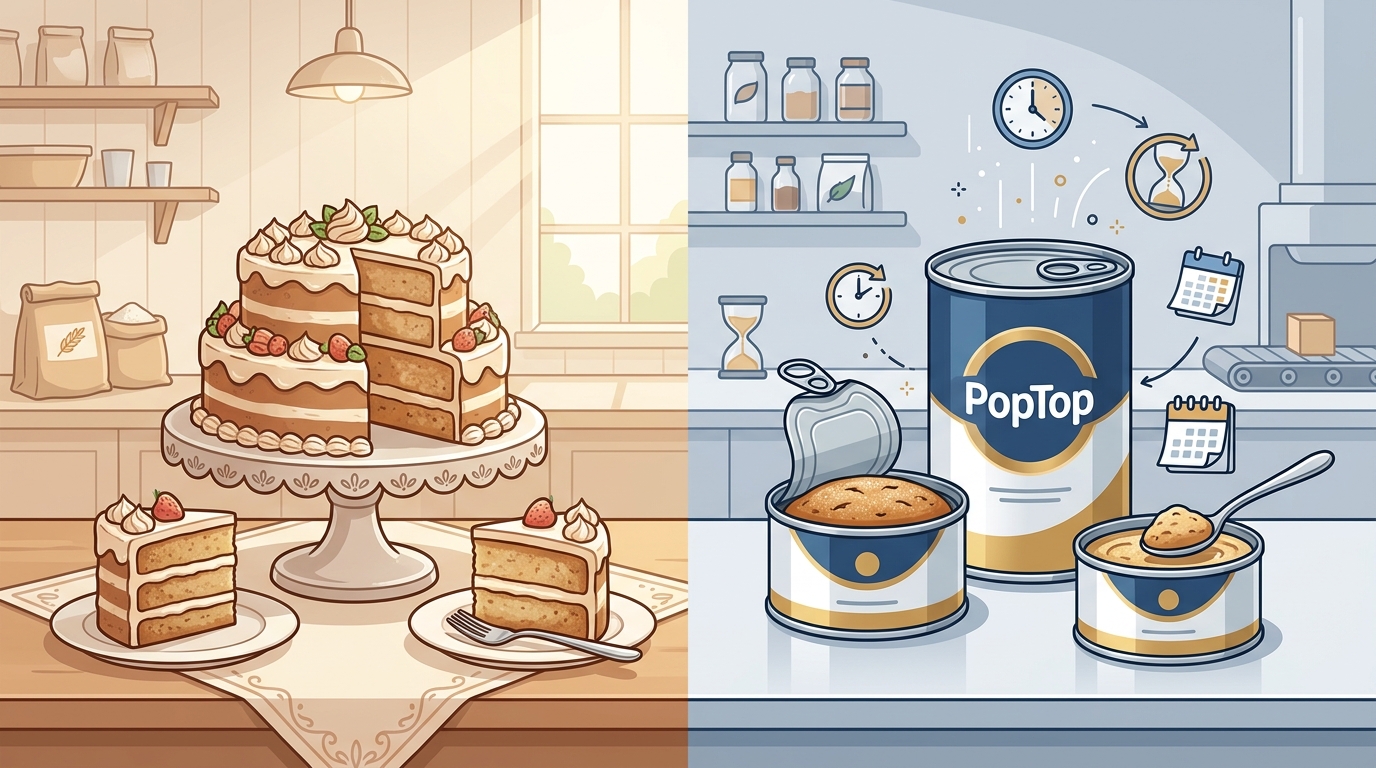
Shelf Life Comparison Table
| Feature | Cake in a Can | Traditional Cake |
|---|---|---|
| Peak Freshness Duration | Extended due to sealed environment | 24-48 hours after cutting |
| Moisture Retention | High; prevents evaporation | Low; rapid drying upon exposure |
| Shipping Viability | High; durable and protected | Low; fragile and temperature-sensitive |
| Texture Preservation | Crunchy toppings stay crisp | Toppings often become soggy |
| Storage Requirements | Minimal; stable until opened | Refrigeration often required |
Key Takeaways
- Preservation Technology: The sealed can creates a microclimate that significantly slows down moisture loss and oxidation compared to traditional cakes.
- Market Growth: The U.S. preserved pastry goods market adds 27.29 billion dollars to the industry, reflecting a shift toward longer-lasting baked goods. This data indicates a strong consumer preference for convenience. (U S preserved)
- Logistical Advantage: Cake in a can can be shipped safely across long distances, whereas traditional cakes are limited by their fragility. View the shipping details for more information.
- Quality Guarantee: Brands like Poptop offer a Freshness Guarantee, ensuring that any damaged or spoiled items are replaced or refunded.
- Texture Integrity: Crunchy toppings and distinct layers remain intact in a can, while they often degrade in traditional formats.
- Consumer Base: With 137.7 million Americans consuming snack cakes in 2020, the demand for portable, long-lasting desserts is substantial. According to Statista, this trend is driven by the need for convenience.
- Flavor Consistency: Sealed packaging prevents flavor migration, ensuring that each bite tastes as intended.
Frequently Asked Questions
How long does a cake in a can stay fresh?
Because the cake is sealed in a can, it stays fresh for a significantly longer period than a traditional cake. The exact duration depends on the specific ingredients, but the sealed environment prevents the rapid drying out that affects open cakes. For the most accurate information, please refer to the Shipping Policy or contact support.
Can I ship cake in a can to another state?
Yes, cake in a can is designed for shipping. The durable can protects the dessert from damage during transit. You can order cans directly from the shop page and have them delivered to your door.
What is the difference between a cake in a can and a traditional cake?
A cake in a can is a single-serving dessert sealed in a cylindrical container, while a traditional cake is a larger, often unpackaged dessert. The can format offers better moisture retention and portability. Retail sales data shows that unpackaged cakes are popular, but the convenience of cans is growing.
Does Poptop offer a freshness guarantee?
Yes, Poptop stands behind every order with a Freshness Guarantee. If your order arrives damaged, warm, or spoiled, you can contact them within 24 hours for a replacement or refund.
Where can I buy cake in a can?
You can order cake in a can directly from the Poptop website. They also have physical locations, such as the Kayf Kava Bar and Hookah Lounge in North Miami Beach, FL.
How do I store cake in a can?
Until you open the can, the cake is stable and does not require refrigeration. Once opened, it should be consumed immediately or stored in the refrigerator if not eaten right away. For more details, check the Shipping Policy.
What flavors are available in cake cans?
Poptop offers a variety of flavors, including Biscoff, Dubai Chocolate, Chocolate, and Strawberry Shortcake. You can view the full flavor lineup on their shop page.
Order Your Fresh Cake Cans
Experience the difference that sealed freshness can make. Whether you are looking for a gift, an office treat, or a personal indulgence, cake in a can offers a level of convenience and quality that traditional cakes cannot match. Order your cans today from Poptop and taste the difference. For any questions about your order, visit the contact page or call +1 (754) 339-2521.