
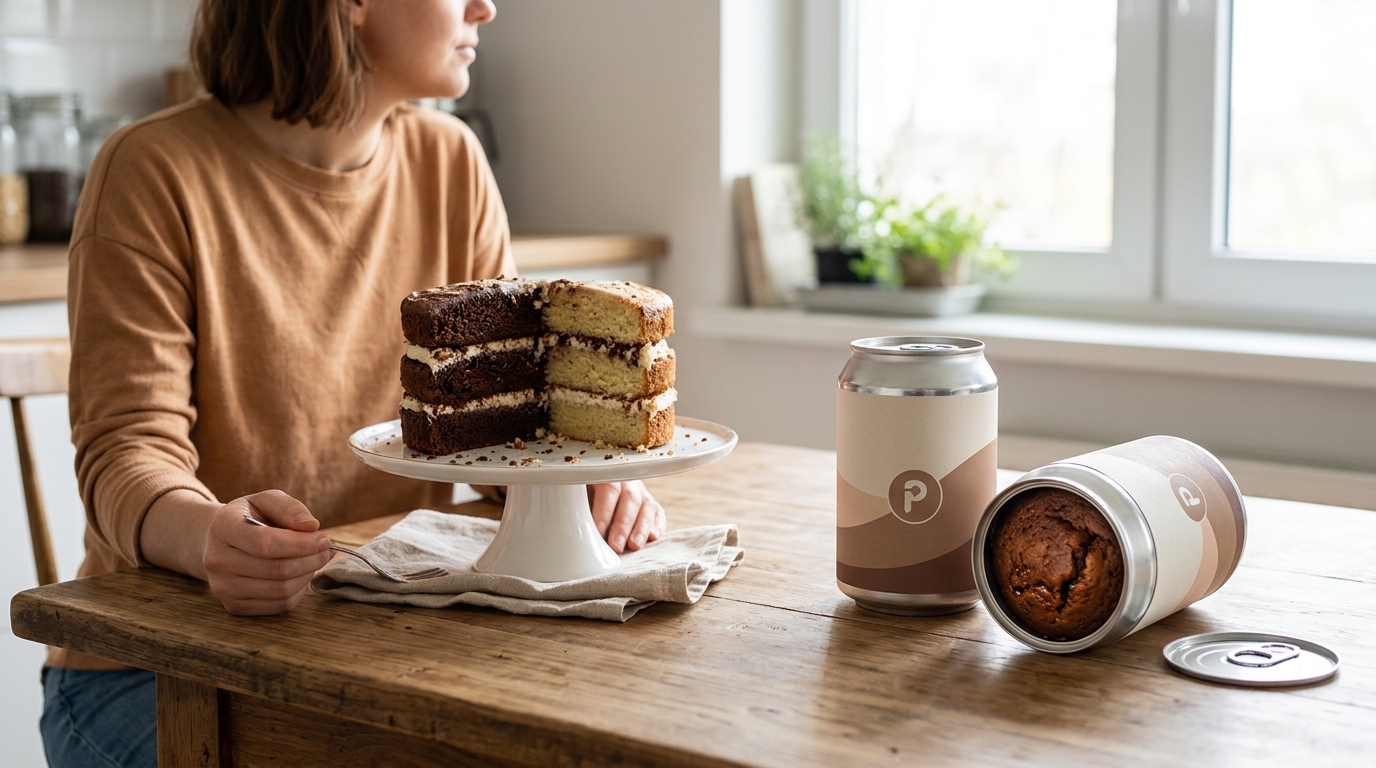
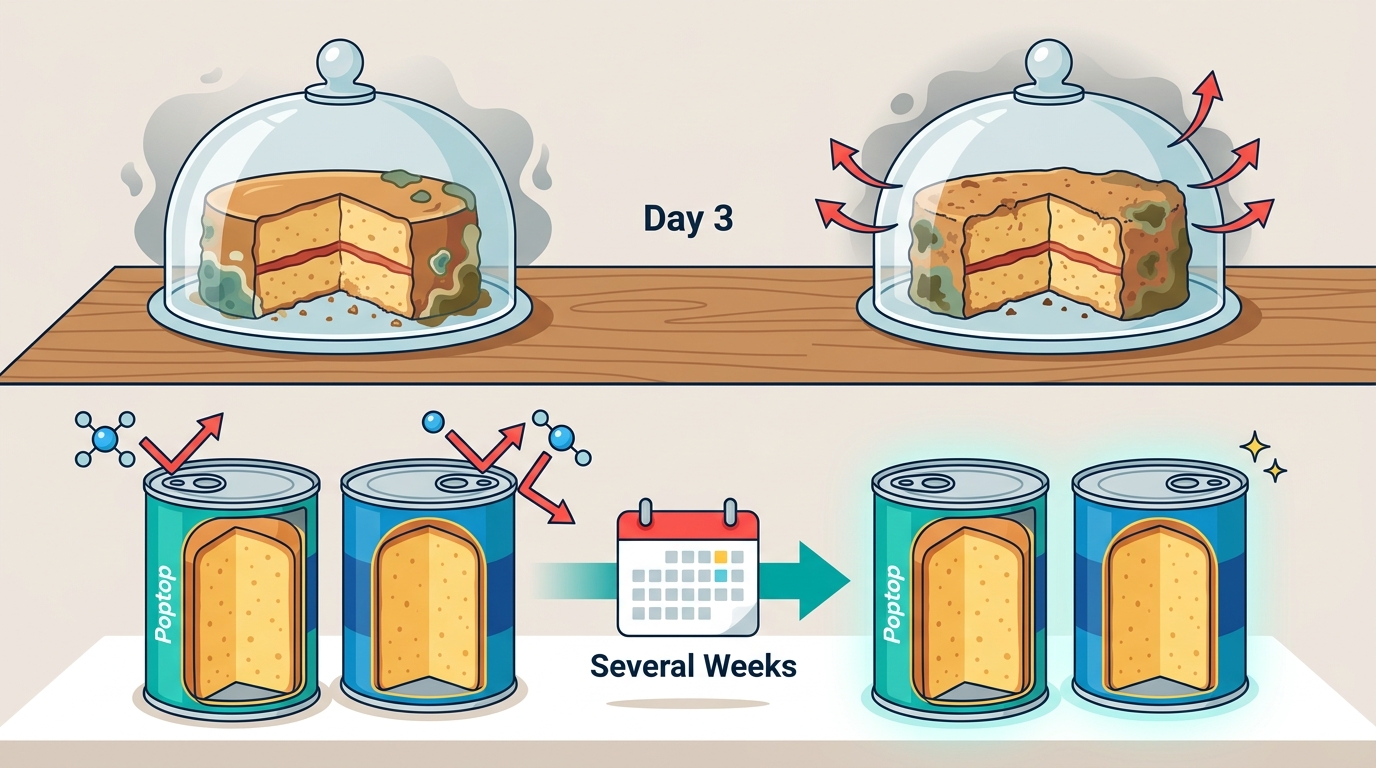
Traditional bakery cakes typically maintain peak freshness for only two to three days when stored at room temperature, whereas sealed cake cans can remain fresh for several weeks due to their airtight preservation. This dramatic difference in longevity is not just about convenience, but about the fundamental engineering of the packaging. As noted in food safety guidelines, perishable baked goods are highly susceptible to mold growth and staling when exposed to ambient air. By eliminating oxygen exposure, the cake-in-a-can format creates a stable microenvironment that significantly extends the edible window without relying on heavy preservatives.
The Mechanics of Preservation
The primary reason cake cans outlast traditional cakes lies in the sealing technology. Traditional cakes are often wrapped in plastic or placed in boxes that allow for minimal air exchange. This exposure accelerates the oxidation of fats and the evaporation of moisture, leading to dryness and rancidity. In contrast, a cake can is hermetically sealed. This process locks in moisture and prevents airborne contaminants from entering the product.
Moisture retention is the critical factor in determining how long a dessert remains enjoyable. When a cake is baked, it contains a specific percentage of water. In a traditional setting, this water migrates to the surface and evaporates, causing the crumb to become stale. The sealed can traps this moisture, effectively keeping the cake in a state of suspended animation until the moment of consumption. This is why shipping policies for fresh desserts often emphasize rapid transit to ensure the product arrives in its optimal sealed state.
Shelf Life Comparison
Understanding the timeline of freshness helps consumers make better purchasing decisions. Below is a detailed breakdown of how the two formats compare over time.
| Timeframe | Traditional Cake (Room Temp) | Cake in a Can (Sealed) |
|---|---|---|
| Day 1 | Peak freshness. Moist and flavorful. | Peak freshness. Identical taste profile. |
| Day 2-3 | Beginning of staling. Dry edges. | Still fresh. Moisture remains locked in. |
| Day 4-7 | High risk of mold. Generally unsafe. | Safe to eat. Texture remains intact. |
| Week 2+ | Significant spoilage. Discard immediately. | Still viable if kept cool and sealed. |
According to general food safety standards, cakes with perishable fillings like cream cheese or fresh fruit should be refrigerated and consumed within three days. However, the sealed nature of the can allows for a much longer window of safety, provided the seal remains unbroken. This extended shelf life is particularly valuable for freshness guarantees and customer satisfaction, as it reduces the likelihood of product degradation during transit.
Storage Conditions & Temperature
While the sealed can offers superior protection, storage conditions still play a vital role in maximizing shelf life. Heat is the enemy of both traditional cakes and cake cans. High temperatures can cause the frosting to melt, the structure to collapse, or the flavors to degrade.
For traditional cakes, refrigeration is often necessary to prevent spoilage, but this can sometimes alter the texture, making the cake harder or drier upon returning to room temperature. Cake cans, however, are designed to be robust. They can withstand slight temperature fluctuations better than delicate layered cakes. For optimal longevity, it is recommended to store cake cans in a cool, dry place away from direct sunlight. If you are looking for contact information for specific storage inquiries, the brand support team can provide tailored advice for your climate.
Flavor Integrity Over Time
Shelf life is not just about safety, but also about taste. Many consumers report that cake cans actually taste better after a day or two. This is because the flavors have had time to meld together in the sealed environment. In a traditional cake, the frosting and cake layers often remain distinct, sometimes leading to a disjointed eating experience if not consumed immediately.
The Matcha Bliss Biscoff Cake in the Can is a prime example of this flavor melding. The biscoff cookies and matcha cream stabilize within the can, creating a uniform taste profile that persists for weeks. In contrast, a traditional biscoff cake might lose its crunch or become soggy within 48 hours. This stability makes cake cans an ideal choice for those who prefer to prepare desserts in advance.
Logistics and Gifting Advantages
The extended shelf life of cake cans directly impacts their utility in gifting and logistics. Traditional cakes are difficult to ship because they are fragile and perishable. They require expedited shipping and careful handling to ensure they arrive in good condition. This limits the geographic reach of traditional bakeries.
Cake cans, however, are designed for travel. They are stackable, durable, and resistant to crushing. This allows them to be shipped via standard mail services, reaching customers across the country. The product collection is available for nationwide shipping, making it possible to send a fresh-tasting dessert to friends and family regardless of distance. This logistical advantage is a key differentiator in the modern dessert market.
Key Takeaways
- Extended Freshness: Cake cans remain fresh for weeks, while traditional cakes last only 2-3 days.
- Sealed Preservation: The airtight seal prevents moisture loss and mold growth.
- Flavor Melding: Flavors often improve in cake cans over the first few days.
- Logistical Ease: Cake cans can be shipped via standard mail, unlike fragile traditional cakes.
- Storage Flexibility: Cake cans are more resistant to temperature fluctuations than traditional cakes.
- Reduced Waste: The longer shelf life reduces the likelihood of product spoilage before consumption.
- Portability: The sealed format allows for mess-free consumption on the go.
Frequently Asked Questions
How long does a cake can last unopened?
An unopened cake can can last for several weeks when stored in a cool, dry place. The sealed environment prevents spoilage and maintains freshness.
Do I need to refrigerate cake cans?
While not strictly necessary for short-term storage, refrigerating cake cans can extend their shelf life further, especially in warm climates. Always check the specific product details for storage recommendations.
Can I freeze cake cans?
Freezing is possible, but it may alter the texture of the frosting and cake. It is generally recommended to consume cake cans within their shelf life rather than freezing them.
Why do cake cans last longer than traditional cakes?
Cake cans last longer because they are hermetically sealed, which prevents oxygen and moisture from entering the package. This slows down the staling process and inhibits mold growth.
Are cake cans safe to ship?
Yes, cake cans are designed to be durable and stackable, making them safe for shipping. They are less prone to damage than traditional cakes, which is why they are a popular choice for shipping desserts.
What is the best way to store cake cans?
Store cake cans in a cool, dry place away from direct sunlight. Avoid areas with high humidity or temperature fluctuations to maintain the best quality.
Can I reuse the cake cans?
Yes, the cans are made of durable materials and can be reused for storage or other purposes after the cake is consumed. This adds to the sustainability of the product.
Order Your Cake Cans
Experience the difference that sealed preservation makes. Whether you are looking for a treat for yourself or a gift for a friend, cake cans offer unmatched freshness and convenience. Explore our full collection of flavors and order your cans today. For any questions about our products or contact us directly for support.